
If you have been hurt in a car accident in Louisiana, the outcome of your case depends almost entirely on what you can prove. Evidence is the difference between fair compensation and a lowball offer that does not cover your medical expenses, lost wages, or pain. This guide walks you through every type of evidence that matters under Louisiana law, how to collect it, and how Schwartz Law Firm uses it to fight for injured clients across Greater New Orleans and statewide.
Key Takeaways
In Louisiana car accident cases, evidence is what wins or loses your claim. Without it, the insurance company controls the narrative. With it, you control the outcome.
-
Photographs, crash reports, medical records, and witness or expert testimony are critical to proving fault and damages in any car accident claim.
-
Louisiana's comparative fault rules—including the modified system effective January 1, 2026—make high-quality evidence essential to keep your fault percentage as low as possible and protect your right to recover damages.
-
Much of the strongest evidence (surveillance footage, black box data, skid marks, debris fields) can disappear within days after a car crash, so failing to collect evidence immediately can hinder claims due to evidence becoming unavailable.
-
Evidence can deteriorate quickly after a car accident occurs, and early attorney involvement is often the difference between a strong case and a weak one.
-
If you were injured in a Louisiana car accident, call Schwartz Law Firm at (504) 837-2263 or message us online for a free consultation about your case.
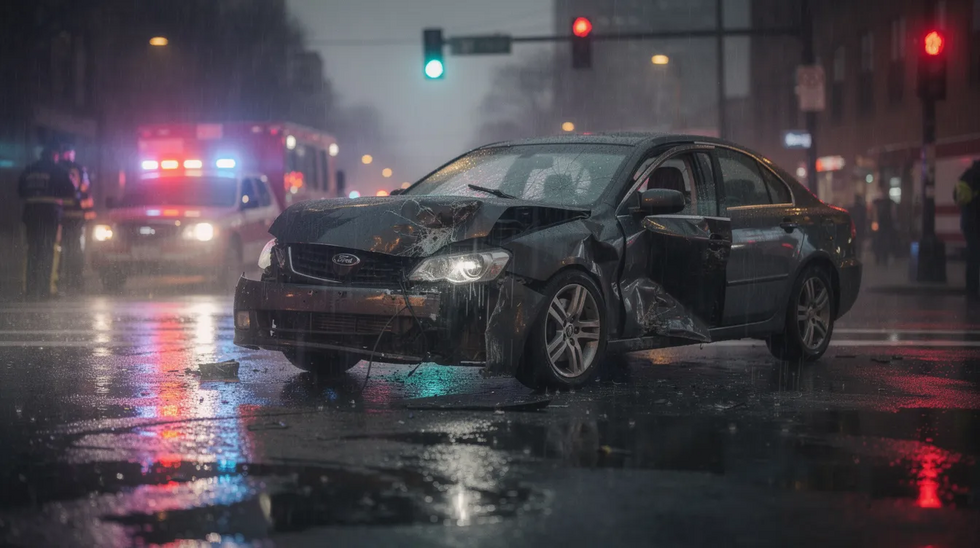
Why Evidence Can Make or Break Your Louisiana Car Accident Case
Evidence in a car accident case is anything that helps prove what happened, who caused the collision, and how badly you were hurt. It includes physical objects, documents, digital data, and testimony from people who saw or studied the crash. When you are dealing with the other driver's insurance company or presenting your case to a jury in Louisiana courts, evidence is how you back up every claim you make.
The main goals of gathering evidence are straightforward:
-
Show how and where the car accident occurred
-
Prove how fault is determined between the parties involved under applicable traffic laws
-
Document the seriousness of your injuries, property damage, and financial losses
Christopher "Chris" Schwartz has spent over 25 years litigating auto accident cases across Louisiana. His work as a former workers' compensation claims adjuster gives him a firsthand understanding of how insurers evaluate evidence, assign fault, and attempt to reduce payouts. He uses that insider knowledge to build detailed evidence packages that obtain verdicts and settlements for his clients.
Consider a scenario: a driver is rear-ended at a red light on Veterans Memorial Boulevard in Metairie. The other driver claims the light had just turned green. But a nearby business's security camera captures the entire collision, and the crash report confirms the other driver received a citation. That video evidence and police report together shift the case from a disputed-fault situation to a clear liability win. Without them, it becomes one driver's word against another's.
If you are unsure whether you have enough evidence after a Louisiana car accident, call (504) 837-2263 for a free consultation.
Understanding Fault and Comparative Fault in Louisiana Car Accidents
Louisiana is a fault state, meaning the driver who caused the crash—and that driver's insurance company—is generally responsible for paying damages to the injured person. Louisiana law requires proving four elements: duty of care, breach of that duty, causation, and damages.
For accidents that occurred before January 1, 2026, Louisiana used a pure comparative fault system. Under that system, you could recover damages even if you were partially at fault. Your compensation was simply reduced by your percentage of fault. If a jury found you 40% responsible, you received 60% of your total damages.
Starting January 1, 2026, Act 15 of the 2025 Regular Session changed Louisiana to a modified comparative fault system. From that date forward, recoveries are limited if you are over 50% at fault—meaning Louisiana now allows recovery only if you are 50% or less at fault. If a jury assigns you 51% or more of the blame, you recover nothing.
Here is what that looks like in practice:
|
Your Fault % |
Total Damages |
What You Recover (2026 Rule) |
|---|---|---|
|
20% |
$100,000 |
$80,000 |
|
50% |
$100,000 |
$50,000 |
|
51% |
$100,000 |
$0 |
Comparative fault can significantly affect recovery based on each party's degree of fault. The insurance company will argue that you share fault—by braking late, exceeding the speed limit, or not paying attention. Strong evidence is how your lawyer pushes that percentage down.
Chris Schwartz's background as a former insurance claims adjuster means he understands exactly how insurers build comparative fault arguments. He now uses that knowledge to dismantle those arguments on behalf of injured clients.
Types of Evidence in Louisiana Car Accident Cases
Car accident cases in Louisiana rely on several categories of evidence, each playing a different role in proving liability and damages. No single piece of evidence wins a case alone. It is typically the combination that tells the full story.
The main categories include:
-
Physical evidence from the accident scene
-
Photographs and video footage
-
Crash reports and police reports
-
Eyewitness testimony and witness statements
-
Expert testimony and digital evidence
-
Medical records and documentation of injuries
Evidence collection in Louisiana includes police reports, medical documentation, and witness statements. In many Louisiana car accident cases, a combination of these evidence types is needed to convince the driver's insurance company or a Jefferson Parish or Orleans Parish jury.
Schwartz Law Firm helps clients gather evidence they can reach themselves—like photos and documents—and also pursues less obvious evidence like black box data and surveillance footage from nearby businesses. In serious 18-wheeler or multi-vehicle crashes involving commercial vehicles, expert testimony and electronic data often become the most important evidence available.
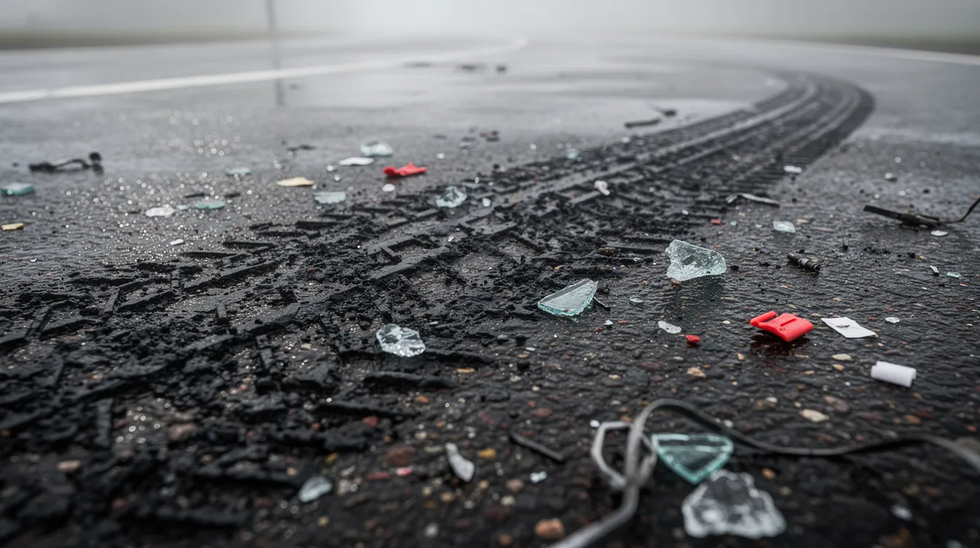
Physical Evidence
Physical objects left behind at the accident scene tell a direct story about the collision: where the vehicles involved ended up, how hard they hit, and what each driver was doing in the seconds before impact.
Key examples of physical evidence include:
-
Vehicle damage patterns (crush zones, intrusion points, broken headlights or mirrors)
-
Tire tread marks and skid marks on the pavement
-
Gouges or scrapes in the road surface
-
Broken guardrails, damaged signs, or displaced poles
-
Debris scattered across the roadway
Skid marks on I-10, US-90, or Airline Highway—or debris patterns at an intersection in Kenner, Gretna, or LaPlace—can help an accident reconstruction expert determine factors like speed, direction, and braking distance. Accident reconstruction experts analyze vehicle damage and skid marks to recreate what happened, and physical evidence often carries more weight than witness accounts because it does not change over time.
Safety always comes first. Do not put yourself in danger to collect evidence on high-speed roads or bridges. Your health matters more than any photograph. If a crash is serious enough, Schwartz Law Firm may send investigators or experts to photograph damage, measure marks, and inspect the vehicles involved.
Photographs and Video
Photos and video are often the most persuasive evidence for juries, judges, and claims adjusters because they visually capture what happened. Photographs of the accident scene are crucial evidence, and photographs and videos are critical for documenting car accident scenes in any car accident case.
When it is safe to do so, document the accident scene with photographs and notes. Photographs should include wide and close-up angles of damages and injuries. Specifically, try to capture:
-
The overall scene from a distance (intersection, road layout, traffic signals)
-
All vehicles from multiple angles
-
Close-ups of vehicle damage
-
License plates of the vehicles involved
-
Road conditions (potholes, standing water, gravel, oil)
-
Weather and lighting conditions
-
Visible injuries on yourself or passengers
Photographs should be taken from multiple angles after an accident. Short smartphone videos—panning across the scene, recording traffic flow, or capturing the other driver's behavior—can be extremely valuable as video evidence.
Beyond your own phone, common sources of video footage include:
-
Surveillance cameras at stores along Metairie Road or Canal Street
-
Home doorbell cameras in residential neighborhoods
-
Red-light or traffic cameras at monitored intersections
-
Dashcams from your vehicle or other nearby vehicles
Surveillance footage can provide unbiased views of the accident and may be the single most important piece of evidence in a disputed case. However, surveillance footage may be overwritten within days after an accident. Schwartz Law Firm moves quickly to request and preserve video once hired, because waiting even a week can mean the footage is gone forever.
Crash Reports
Crash reports prepared by state police, city police, or the nearest sheriff's office are core documents in most car accident cases. Official police reports are foundational evidence in Louisiana car accident cases, and police reports contain crucial details about the accident.
You should notify police immediately after any crash involving injury or damage. Call 911 for significant injuries or damage over $500. Under Louisiana Revised Statutes § 32:398, law enforcement agencies must investigate and prepare reports when a crash results in injury, death, or property damage exceeding $500.
Police reports must be obtained, as they contain diagrams, statements, and citation information. A typical crash report includes:
-
Date, time, and exact location where the crash occurred
-
Names and insurance details of all drivers
-
Officer observations about the accident scene, road conditions, and weather
-
Citations or traffic violations issued
-
A preliminary diagram showing the collision and positions of vehicles
Louisiana law allows for obtaining crash reports and associated photographs post-accident. Louisiana State Police crash reports can be purchased online for approximately $16.50 plus processing fees, while fatal crash reports may require in-person requests at local Troop Offices. Reports from a local police department or the investigating agency in an incorporated city may have different request procedures.
Crash reports provide essential details about the accident, including conditions and fault assessments. While a crash report is not the final word on how fault is determined, officers' observations and citations are weighed alongside applicable traffic laws, and it strongly influences how the driver's insurance company evaluates the case. Schwartz Law Firm routinely orders crash reports, examines officer diagrams, and challenges mistakes or missing information when building a Louisiana car accident case.
Eyewitness Testimony
Eyewitness testimony can fill gaps in accident evidence, especially when the other driver's story changes or directly contradicts the physical evidence. A bystander who watched the other party run a red light or swerve across lanes can provide powerful support for your version of events.
When possible, collect witness contact information at the accident scene. Ask bystanders for names, phone numbers, and email addresses before they leave. Preserving witness information is vital right after an accident for later testimony. Potential witnesses can include:
-
Other drivers stopped at the intersection
-
Pedestrians on the sidewalk
-
Workers at a nearby job site or business
-
Residents who saw the collision from a porch, balcony, or window
Witness statements provide corroboration against conflicting accounts in accidents. Schwartz Law Firm may contact witnesses later to obtain detailed written statements and may call them to testify if the case goes to trial in Orleans Parish, Jefferson Parish, or elsewhere across Louisiana.
Louisiana does not require eyewitness testimony to file a claim. Strong physical and documentary evidence—vehicle damage patterns, video footage, crash reports—can stand on their own when no one else saw the collision occurred. If you had a "no-witness" crash, do not assume you cannot recover.
Medical Evidence
Medical records document injuries and treatment after an accident and are critical evidence for proving the seriousness of your injuries and the full value of a car accident claim in Louisiana. Medical records and bills establish the link between the collision and injuries.
Key items to collect include:
-
Emergency room records and diagnostic imaging (X-rays, MRIs, CT scans)
-
Urgent-care and primary-care visit notes
-
Specialist reports (orthopedic, neurological, pain management)
-
Physical therapy and rehabilitation logs
-
Prescription medication lists
-
Surgery reports and post-operative notes
The timing of medical treatment is essential to counter claims of unrelated injuries. Getting medical attention immediately—or as soon as possible—after a crash helps connect the injuries directly to the accident in the eyes of insurers and Louisiana courts. Gaps in medical treatment can lead to disputes over injury causation by insurers. If you skip appointments, delay care, or try to "tough it out," the driver's insurance company will use that gap to argue your injuries came from something else entirely.
Lost income can be documented with pay stubs and employer statements. Beyond medical records, keeping a daily pain diary and collecting employer letters documenting lost wages strengthens the financial side of your personal injury claim.
Schwartz Law Firm helps organize medical evidence and may work with treating physicians or medical professionals to explain long-term disability, PTSD, or chronic pain to a jury. Medical experts can testify about future care needs and ongoing medical expenses that extend well beyond the initial recovery.
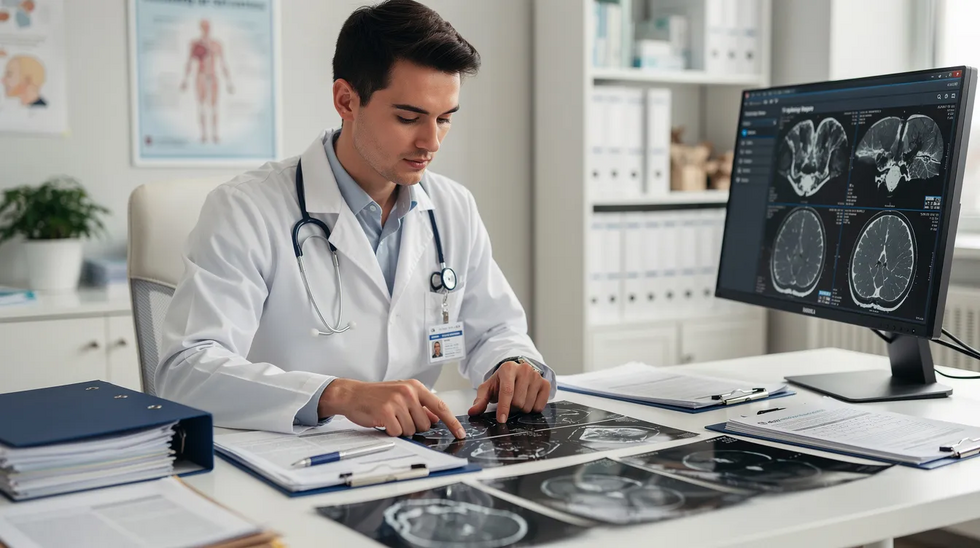
Expert Testimony and Digital Evidence
In many serious car accidents, expert testimony and electronic data become central to proving how the crash caused injuries and who is responsible. Expert testimony may be needed to analyze complex accident dynamics that go beyond what photographs and witness accounts can show.
Common experts used in Louisiana car accident cases include:
-
Accident reconstruction experts who calculate speeds, angles, and forces
-
Biomechanical engineers who explain injury mechanisms
-
Medical specialists who testify about long-term prognosis
-
Vocational and economic loss experts who quantify future lost wages and earning capacity
Digital evidence like black boxes can establish fault objectively. Modern cars and 18-wheelers carry event data recorders (EDRs) that capture speed, braking force, throttle position, seat belt usage, and other factors in the seconds before and during a crash. In LaBorde II v. Shelter Mutual Insurance Co. (2011), a Louisiana appellate court held that EDR data is admissible evidence, with foundational testimony from qualified experts establishing reliability.
Digital data such as cell phone records and event data recorders can be relevant in liability cases. Other sources of electronic data include:
-
GPS logs and navigation system history
-
Rideshare trip records
-
Truck driver electronic logging devices (ELDs)
-
Phone records showing calls or texts at the time of the crash (proving distracted driving)
-
Social media posts that contradict what the other driver tells their insurer
Under Louisiana law (HB 737), no one may delete, erase, or manipulate recorded data when litigation is reasonably anticipated. Spoliation letters can be sent to preserve surveillance footage and digital data. Schwartz Law Firm knows how to send these preservation demands to secure evidence before it is erased or overwritten.
Collecting and Preserving Evidence After a Car Accident in Louisiana
Preserving evidence begins the moment the accident occurred. Here are practical steps you can take in the hours and days after a crash without compromising your health.
At the Scene
If you are physically able and it is safe to do so, take these steps at the accident scene:
-
Call 911 immediately if there are significant injuries or property damage.
-
Obtain necessary medical attention before anything else.
-
Exchange insurance information with the other driver.
-
Document the accident scene with photographs from multiple angles.
-
Collect witness contact information—names, phone numbers, email addresses.
-
Note the location of any traffic cameras or surveillance cameras from nearby businesses.
In the Days After the Crash
After leaving the scene, continue preserving evidence by following these steps:
-
Save all medical bills, receipts, and records related to treatment.
-
Start a pain diary documenting daily pain levels, mobility limitations, and disruption to your life.
-
Collect employer letters and pay stubs to document lost wages.
-
Preserve damaged clothing, personal items, and any other physical evidence.
-
Do not repair your vehicle until damage has been thoroughly documented.
Organizing evidence chronologically aids legal claims and clarity during presentations to insurers and courts. Schwartz Law Firm encourages clients to bring everything they have—photos, repair estimates, text messages with the driver's insurance company—to the free consultation so nothing is overlooked.
Evidence like security video from a French Quarter business or a St. Charles Parish intersection often must be requested within days. Early attorney involvement is critical to ensure nothing slips away.
How Evidence Shapes Negotiations with the Driver's Insurance Company
The first serious fight over evidence usually happens during insurance claims negotiations with the at-fault driver's insurance company. This is where available evidence either forces a fair offer or allows the insurer to lowball you.
Adjusters review crash reports, photos, medical records, and prior injury history in an effort to reduce payouts or argue comparative fault against the injured person, and they compare that evidence against applicable traffic laws when evaluating liability. They are trained to look for weaknesses: inconsistencies in your recorded statement, gaps in medical treatment, photos that suggest minor damage rather than a serious collision.
Strong, organized evidence changes the dynamic. A clear video from a Metairie intersection showing the other driver running a red light can force insurers to reconsider a low settlement offer. A detailed crash report with a citation against the other driver, combined with thorough medical records, tells the adjuster that this case has teeth.
Chris Schwartz's prior work as a workers' compensation adjuster gives him an insider's understanding of insurance tactics, which he now uses for injured clients in Greater New Orleans and statewide. He knows what adjusters look for, what they try to hide behind, and how to counter their arguments with evidence that speaks for itself.
Before giving any recorded statement to the other driver's insurance company, call (504) 837-2263. Let Schwartz Law Firm handle all communications with insurers so nothing you say is used against you.
Filing a Lawsuit: Using Evidence in Court Under Louisiana Law
Most car accident cases settle during the claims process, but some require filing a lawsuit in civil district court in parishes like Orleans, Jefferson, St. Bernard, Lafourche, or Terrebonne.
Louisiana law has historically allowed one year to file a personal injury lawsuit. However, prescriptive periods for personal injury car accident cases can change depending on the accident date and updates to the law. For accidents occurring on or after July 1, 2024, the prescriptive period is two years under Louisiana Civil Code Article 3493.1. Because these deadlines shift, the safest approach is to verify timing with a lawyer as early as possible.
Once a lawsuit is filed, both sides use formal discovery tools to obtain and challenge evidence:
-
Interrogatories – written questions that must be answered under oath
-
Document requests – demands to produce records, photos, and communications
-
Depositions – sworn testimony taken outside the courtroom
-
Subpoenas – orders compelling witnesses or businesses to produce evidence or appear
At trial, evidence is presented through eyewitness testimony, expert testimony, crash report excerpts, medical records, photos, and any available video footage. Chris Schwartz devotes 100% of his practice to litigation and has tried or resolved thousands of personal injury cases, including complex auto, 18-wheeler, and maritime injury claims.
What Makes Evidence Different in Greater New Orleans, River, and Bayou Parishes
Local roads, traffic patterns, and industries shape how car accidents happen and what evidence is available in different parts of Louisiana. Port traffic, petrochemical plants, refineries, and shipyards create unique hazards, and the legal process for each case must account for those regional realities.
Concrete local examples show how geography affects evidence:
-
Downtown New Orleans: tourist traffic, streetcar crossings, one-way streets, and dense pedestrian activity create frequent low-speed but injury-producing collisions. Cameras are plentiful in the French Quarter and CBD.
-
Jefferson Parish / Airline Highway: congested corridors with heavy commercial traffic, frequent rear-end crashes, and distracted driving incidents. Nearby businesses often have surveillance cameras.
-
US-90 through St. Charles and Lafourche Parishes: heavy truck traffic, including oil-field equipment and 18-wheelers, leading to high-speed collisions where an accident reconstruction expert is often essential.
-
Rural Terrebonne and Ascension Parishes: two-lane roads with limited traffic cameras, longer law enforcement response times, and more reliance on physical evidence, road conditions, and expert reconstruction.
Some areas have more cameras and potential witnesses, while rural River and Bayou Parishes may require deeper investigation. Schwartz Law Firm routinely represents clients from Orleans, Jefferson, St. Bernard, Plaquemines, St. John the Baptist, St. James, Ascension, Lafourche, Terrebonne, and other parishes across Louisiana. If you are in any of these communities, reach out early so evidence unique to your crash location can be preserved.

How Schwartz Law Firm Helps You Gather Evidence and Protect Your Rights
Schwartz Law Firm is a boutique Louisiana practice focused on car accidents, workers' compensation, and personal injury. Clients work directly with Chris Schwartz—a lawyer with over 25 years of trial experience and an MBA—rather than being handed off to a paralegal or associate. That personalized attention is a significant role in how cases are built and resolved.
Specific tasks the firm handles in car accident cases include:
-
Ordering and analyzing crash reports from the state police station, local police department, or nearest sheriff's office
-
Contacting witnesses and obtaining detailed written or recorded statements
-
Securing photos, video footage, and surveillance footage from nearby businesses before it is overwritten
-
Sending spoliation and preservation letters to parties who control important evidence
-
Ordering and organizing medical records chronologically
-
Hiring qualified accident reconstruction experts, biomechanical engineers, and economic loss experts when needed
There are no upfront costs for expert testimony in most cases. Fees and case expenses are typically advanced by the firm and repaid only if there is a recovery. Schwartz Law Firm also maintains a community-oriented policy of donating a portion of its attorney fees to a nonprofit organization chosen by the client when a case settles.
Ready to protect your case? Call (504) 837-2263 or message us online for a free consultation about your Louisiana car accident case.
When You Should Call a Louisiana Car Accident Lawyer About Evidence
Some situations demand immediate legal involvement because evidence shows its full value only when it is preserved in time. You should contact a lawyer quickly if your case involves:
-
Serious or life-threatening injuries
-
Disputed fault or conflicting accounts
-
Hit-and-run crashes
-
Uninsured or underinsured motorists
-
Commercial vehicles or 18-wheeler accidents
-
Multiple vehicles involved in the collision
In these cases, trucking company records, black box data, and business surveillance video can be lost or destroyed within days. The defense and the other party's insurer may already be building their case, and delay puts you at a disadvantage. Public safety investigations by the investigating agency may produce additional evidence, but you need a lawyer to ensure it is obtained and preserved for your benefit.
Even if you believe you were partly at fault, Louisiana's comparative fault rules may still allow you to recover compensation. Having an attorney review the available evidence and other factors surrounding the crash is worth the time—and it costs you nothing upfront.
Schwartz Law Firm offers free consultations and contingency-fee representation. There is no attorney fee if there is no recovery in most personal injury and car accident cases. Call Chris Schwartz at (504) 837-2263 as soon as possible after your car accident to protect your evidence and your case.
FAQs About Car Accident Evidence in Louisiana
These frequently asked questions address common concerns about car accident evidence that were not fully covered above. The answers provide general information only. For advice about your specific Louisiana car accident case, contact Schwartz Law Firm directly.
What if I was too injured at the scene to gather evidence?
Many seriously injured clients cannot collect evidence themselves at the accident scene, and that is completely okay. Medical care must always come first. Police crash reports, EMS run sheets, vehicle damage photos taken by law enforcement, and security video from nearby businesses can all be obtained after the fact. Schwartz Law Firm can investigate the crash, locate witnesses, and retrieve available footage once you contact the office—even if days or weeks have passed since the collision occurred.
Can I still win a Louisiana car accident case if there were no eyewitnesses?
Yes. Louisiana law does not require third-party eyewitnesses to prove fault or file a claim. Many strong car accident cases rely entirely on physical evidence, crash reports, medical records, and expert testimony. Objective evidence—vehicle damage patterns, skid marks, black box data—often carries more weight than memory, which fades over time. If you had a no-witness crash, have your case evaluated rather than assuming you cannot recover damages.
Should I talk to the other driver's insurance company before I speak with a lawyer?
While you must usually report the crash to your own insurer, you are not required to give a recorded statement to the at-fault driver's insurance company without legal advice. Adjusters may use your statements to argue comparative fault against you or minimize the seriousness of your injuries. Anything you say in a recorded statement can be taken out of context. Call Schwartz Law Firm at (504) 837-2263 before speaking in detail with any adjuster from the other side.
How long do I have to preserve evidence and file a lawsuit in Louisiana?
Legal deadlines—called prescriptive periods—for filing car accident lawsuits in Louisiana depend on the accident date and current law. Louisiana has historically allowed one year to file a personal injury lawsuit, and recent legislative changes have adjusted these timelines. The safest approach is to consult a lawyer as soon as possible to determine which deadline applies to your case. Keep in mind that many types of important evidence—traffic camera video, business surveillance, black box data—may be lost within days or weeks, long before any formal filing deadline expires. Do not wait.
How much does it cost to hire Schwartz Law Firm for a car accident case?
Schwartz Law Firm typically represents car accident victims on a contingency-fee basis. That means no hourly billing and no attorney fee if there is no recovery. The firm advances most case costs—such as expert fees, crash report charges, and medical record requests—and is reimbursed only from the settlement or judgment, not out of your pocket up front. Call (504) 837-2263 or message us online for a free case evaluation to discuss fees and next steps in detail.


Comments
There are no comments for this post. Be the first and Add your Comment below.
Leave a Comment