
Mental injuries at work are real, and Louisiana law does provide a path to compensation for conditions like PTSD, severe anxiety, and depression. But the rules are stricter than what most injured workers expect. This guide breaks down exactly how mental health workers comp claims work in Louisiana, what you need to prove, and how Schwartz Law Firm can help you fight for the benefits you deserve.
Key Takeaways
-
Louisiana workers compensation law recognizes two types of work-related mental injury: mental injury from mental stress alone ("mental-mental") and mental injury caused by a physical work accident ("physical-mental"). Each has different proof requirements.
-
Both types of mental injury claims require a diagnosis from a licensed psychiatrist or psychologist using the Diagnostic and Statistical Manual of Mental Disorders (DSM) criteria and must be supported by clear and convincing evidence connecting the condition to work.
-
Mental health services are covered under Louisiana's workers compensation laws if statutory criteria are met, including authorization for psychiatric treatment and a documented connection to employment.
-
Chris Schwartz is a former workers compensation insurance adjuster who now represents only injured workers at Schwartz Law Firm in Metairie, serving clients across Greater New Orleans and all of Louisiana.
-
If you believe your job caused or worsened a mental health condition, call (504) 837-2263 or send a confidential message online for a free consultation.
Understanding Mental Health and Workers' Compensation in Louisiana
Mental health conditions like post traumatic stress disorder, anxiety, and depression can be covered under Louisiana workers compensation when they result from a workplace accident or an extraordinary work-related stressor. Conditions such as PTSD, depression, and anxiety must be established through proper diagnosis and documentation for treatment approval under the workers compensation system.
For qualifying mental injury claims, Louisiana workers comp can provide medical expenses for therapy, psychiatric care, medications, and in some cases hospitalization, as well as wage benefits when a mental health condition prevents you from performing job duties.
Chris Schwartz founded Schwartz Law Firm in 1997 after working as a workers compensation claims adjuster. That background gives him firsthand knowledge of how insurers evaluate, challenge, and sometimes deny mental health claims. He now devotes 100% of his practice to representing injured employees and personal injury clients.
The firm is based in Metairie and serves workers throughout Greater New Orleans, including Orleans Parish, Jefferson Parish, St. Charles Parish, St. John the Baptist Parish, St. Bernard Parish, and Plaquemines Parish. The firm also handles cases in the river and bayou parishes (Lafourche, Terrebonne, St. James, Ascension, and beyond) and takes cases statewide across Louisiana. For a full overview of the firm's workers compensation practice, visit the Louisiana workers compensation page.
How Louisiana Law Treats Mental Injury in Workers' Comp
The Louisiana Workers' Compensation Act draws a line between two categories of mental injury:
-
Mental injury caused by mental stress (often called "mental-mental"): A psychological condition like PTSD that develops from a sudden, unexpected, and extraordinary work-related stressor, with no underlying physical injury.
-
Mental injury caused by physical injury ("physical-mental"): A mental health condition that develops after a documented physical workplace accident, such as chronic pain leading to depression or a violent accident triggering PTSD.
Not all job-related stress or unhappiness qualifies. Louisiana law is written narrowly. The statute, La. R.S. 23:1021(8), requires that any mental injury be proven by clear and convincing evidence, a standard higher than the usual "more likely than not" civil burden. Legal standards in Louisiana specify high requirements for proving mental health injury claims, making documentation and legal support critical from the start.
Courts look for credible medical evidence and a strong, provable connection between the workplace event and the diagnosed condition. Vague complaints about being overworked or unhappy at a job will not meet the threshold.
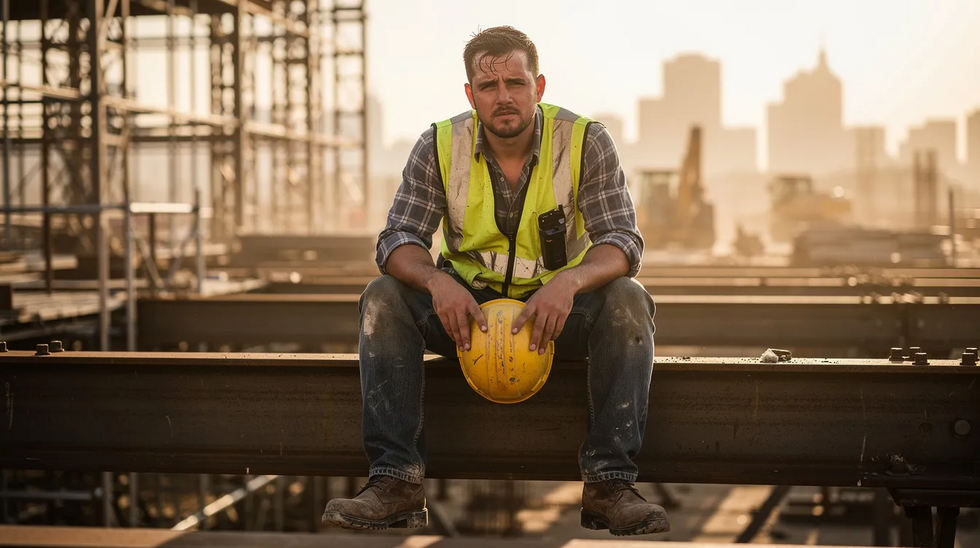
Two Main Types of Compensable Mental Injuries in Louisiana Workers' Compensation
Both mental-mental and physical-mental injuries can lead to a valid workers compensation claim if the statutory criteria are met. Louisiana law distinguishes between mental stress and physical injury as the source of a mental health condition, and the distinction matters because it affects what you must prove.
Mental injuries from extraordinary workplace stress (mental-mental) require you to show a sudden, specific, and unusual event at work. Mental injuries that follow a physical work accident (physical-mental) are anchored to a documented physical event, which gives the claim a more concrete starting point. Mental injuries from physical injuries are easier to prove because the physical accident itself is typically already in the medical records and the workers comp claim file.
Workers should not try to self-diagnose which category they fall into. The legal and medical analysis is nuanced, and an experienced workers compensation attorney can evaluate the facts early and advise on the strongest path forward.
Mental-Mental Injuries: When Mental Stress Alone Can Be Enough
A mental-mental workers comp claim arises when an employee develops a mental injury, such as PTSD, acute stress disorder, or major depression, from an extraordinary stress-related event at work that is sudden, unexpected, and extraordinary, with no accompanying physical injury. Louisiana covers mental injuries from extraordinary workplace stress, but the bar is high. Mental injuries must be caused by a specific incident to qualify.
Examples that could meet the threshold:
-
A bank teller in New Orleans held at gunpoint during an armed robbery
-
A casino employee in Jefferson Parish who witnesses a violent assault by a patron
-
A teacher in St. Bernard Parish threatened with serious bodily harm in a single, terrifying classroom incident
In Sparks v. Tulane Medical Center (1989), the Louisiana Supreme Court held that purely mental injuries without physical trauma could be compensable if the claimant proved a sudden, unexpected, and disabling incident at work. After that decision, the legislature codified the mental-mental claim in La. R.S. 23:1021(8)(b), adding the requirement that proof be by clear and convincing evidence.
Ordinary work pressures, long hours, chronic understaffing, or routine conflicts with supervisors usually do not meet the "extraordinary" stress threshold under Louisiana workers compensation law. In Emerson v. Willis Knighton (2018), a nurse's claim based on ongoing work stress was denied because the court found her stressors were general and recurring rather than sudden and extraordinary.
Proving mental-mental claims is challenging and almost always requires a seasoned workers compensation attorney and strong medical evidence from qualified professionals.
Physical-Mental Injuries: Mental Health Conditions Following Physical Harm
Physical-mental claims occur when a worker suffers a physical injury on the job and later develops a mental health condition such as PTSD, anxiety, depression, or adjustment disorder because of the accident or the chronic pain that follows.
Concrete examples:
-
A construction worker in St. Charles Parish who falls from scaffolding and later experiences flashbacks and panic attacks
-
A delivery driver from Orleans Parish injured in a serious auto accident who develops post traumatic stress disorder
-
A nurse in Jefferson Parish who sustains a back injury from lifting patients and later suffers debilitating anxiety and insomnia
In Traweek v. City of West Monroe (1998), a police officer exposed to pepper spray (a documented physical trauma) developed PTSD. The court awarded benefits for both the physical and psychological injuries because the mental condition was diagnosed by a qualified professional and met DSM criteria.
Physical-mental claims are often more straightforward to connect to work because the underlying physical accident is already documented in the workers comp claim file. Louisiana workers compensation may cover both the physical and mental components of the injury claim, including counseling, medication, and wage-loss benefits if the mental injury keeps the worker off the job.
What Counts as a Compensable Mental Health Condition? (PTSD, Anxiety, Depression, and More)
Common mental health diagnoses that arise in workers comp cases include:
|
Condition |
Typical Workplace Trigger |
|---|---|
|
Post traumatic stress disorder (PTSD) |
Violent incidents, serious accidents, witnessing death or severe injury |
|
Major depressive disorder |
Chronic pain from injury, loss of function, inability to return to work |
|
Generalized anxiety disorder |
Ongoing fear of re-injury, workplace trauma |
|
Panic disorder |
Flashbacks, triggers in similar work environments |
|
Adjustment disorder |
Difficulty coping after a physical or psychological workplace event |
The Diagnostic and Statistical Manual of Mental Disorders (DSM-5-TR), published by the American Psychiatric Association, is the standard used by psychiatrists and psychologists when diagnosing a mental injury for workers compensation claims. Louisiana law specifically requires that the diagnosis follow the "most current issue" of the DSM.
Psychological symptoms can include flashbacks, nightmares, intrusive thoughts, severe anxiety, irritability, sleep disturbance, exaggerated startle response, avoidance, and social withdrawal. Even if these symptoms appear weeks or months after a work accident or traumatic events at work, they may still be related and should be reported and evaluated. Mental health professionals assist employees in navigating workers compensation claims, both by providing treatment and by documenting how the injury affects the worker's ability to function.
Schwartz Law Firm has experience connecting mental health evidence to workplace incidents and, where appropriate, to underlying physical injuries.
Diagnosis Requirements: Psychiatrists, Psychologists, and "Clear and Convincing" Evidence
Under Louisiana workers compensation law, a mental injury must be diagnosed by a licensed psychiatrist or psychologist using accepted diagnostic criteria from the DSM. A diagnosis from a licensed clinical social worker, counselor, or general practitioner will not satisfy the statute.
Mental health claims require clear and convincing evidence. In practical terms, this means the evidence must show it is highly probable (not just possible or even "more likely than not") that the mental injury was caused by the work-related accident or stressor.
Three categories of documentation carry the most weight:
-
Detailed treatment records from the diagnosing psychiatrist or psychologist, showing the full clinical picture
-
Consistent symptom reporting across all medical visits, employer communications, and insurance forms
-
Written opinions from the treating mental health professional that specifically address causation, tying the diagnosis to the workplace event
Insurers often request independent medical evaluations (IMEs) with their own mental health experts. These exams can be adversarial. A workers compensation attorney can prepare you for the IME, explain what to expect, and challenge conclusions that contradict your treating doctor's findings.

Connecting the Mental Injury to Work: Causation and Common Disputes
The central legal issue in any mental health workers comp claim is causation: proving that the mental stress or condition is primarily tied to a work-related event or physical injury rather than personal or preexisting issues. Claims for mental stress must link to a specific work-related incident.
Common defense arguments insurers raise in mental health workers comp cases:
-
Preexisting mental health history: The insurer blames symptoms on prior depression, anxiety, or other mental health issues documented before the workplace incident.
-
Non-work stressors: The insurer points to family problems, divorce, financial stress, or other life events as the true cause.
-
"Ordinary" stress: The insurer argues the workplace event was routine, predictable, or not extraordinary enough to trigger compensable mental injury under Louisiana law.
In Bass v. Farmer & Cheatham (1995), a PTSD claim was denied because the claimant had preexisting PTSD and the work stressors were not proven by clear and convincing evidence to be sudden or extraordinary. The court scrutinized the employee's full mental health history.
Medical histories, coworker testimony, employer incident reports, and expert opinions are all used to counter these arguments. An attorney can help gather necessary evidence for mental health claims, including records from treating doctors, lay witnesses, and workplace documentation.
If you have a prior mental health condition, speak with Chris Schwartz early. He can help shape the record and protect against mischaracterizations of prior mental health issues that could undermine your claim.
Evidence You Need to Support a Mental Health Workers Comp Claim
Successful mental health workers comp claims rely on thorough documentation from the moment the injury occurred or symptoms began. Mental health claims can be harder to prove than physical injury claims, so the record-building process is more important, not less.
Key evidence types:
-
Immediate written reporting of the incident to a supervisor, with early mention of emotional symptoms
-
Emergency room or initial medical records documenting fear, panic, confusion, or psychological distress
-
Ongoing records from psychiatrists, psychologists, and therapists
-
Notes or journals kept by the worker describing nightmares, anxiety, avoidance, and daily struggles
-
Witness statements from coworkers, supervisors, friends, and family describing changes in behavior or mood
-
Updated medical records reflecting treatment progress and ongoing limitations
Mental health records help establish how conditions affect work ability and determine work restrictions. Consistency between what you report to doctors, the employer, and the workers compensation insurer is vital to credibility. Any contradictions in the record will be used against you.
Save all paperwork. Keep a symptom diary. Share everything with your Louisiana workers compensation attorney.
Workers' Compensation Benefits Available for Mental Health Injuries
Once a mental injury is accepted under Louisiana workers compensation, you may qualify for several categories of workers comp benefits:
-
Medical treatment: Therapy, psychiatry appointments, prescription medications, and in some cases inpatient psychiatric care. These are paid by workers compensation insurance with no standard co-pays when properly authorized. Coverage for psychological services depends on whether treatment is authorized and medically necessary.
-
Wage benefits: Temporary Total Disability (TTD) pays up to two-thirds of the average weekly wage when the mental injury prevents you from returning to any work, helping replace lost wages while you are out. Supplemental earnings benefits may apply if you can return to lighter job duties but earn less, helping make up part of the reduced income. Other disability classifications exist for permanent conditions.
-
Vocational rehabilitation: Retraining or job placement services if you cannot safely return to the prior job because of psychological limitations that affect the worker's ability to perform job duties.
Mental health treatment is just as legitimate as surgery or physical therapy under Louisiana workers compensation law when properly documented. Treatment plans developed by your psychiatrist or psychologist should be followed closely and submitted to the insurer for authorization.
Chris Schwartz can review whether your current benefits are correct and challenge improper reductions or terminations of wage replacement or medical care. Call (504) 837-2263 to discuss your situation.
How Mental Health Treatment Works Under Louisiana Workers' Compensation
Injured workers generally have the right to choose their own treating physician in a given specialty, including a psychiatrist or psychologist. However, employers and insurers sometimes dispute these choices or attempt to direct workers to their preferred providers.
Authorization is necessary for psychiatric treatments under Louisiana's workers compensation rules. Prior authorization, utilization review, and insurer guidelines can delay or restrict therapy sessions, medication changes, or referrals to specialists. These administrative hurdles are common in mental health claims.
Steps to protect your treatment:
-
Tell every provider that your condition is work-related and part of a workers compensation claim.
-
Keep all scheduled appointments and follow treatment recommendations without gaps.
-
Promptly report any denials or delays in necessary medical treatment to a workers compensation attorney.
The firm's workers compensation benefits page provides additional detail on how medical benefits and wage benefits work under Louisiana's workers compensation system.
Common Reasons Mental Health Workers Comp Claims Are Denied or Limited
Mental health workers comp claims face denial at a higher rate than many physical injury claims. Frequent reasons include:
-
The insurer says the stressor was "ordinary" and not extraordinary enough to meet the statutory threshold
-
The insurer blames symptoms on prior mental health history or mental health issues predating employment
-
The worker delayed reporting psychological symptoms after a physical accident
-
Inconsistent statements across medical records, incident reports, and insurance forms undermine credibility
-
The diagnosis was not made by a licensed psychiatrist or psychologist, or did not follow DSM criteria
Some denials are based on misunderstandings of Louisiana law or incomplete information, and many can be overturned on appeal with proper legal support. A denial letter is not the final word. Appeals through the Louisiana Office of Workers' Compensation Court are available, and a workers compensation judge will review the evidence independently.
For more detail on the appeals process, visit the firm's workers comp appeal in Louisiana resource.
Filing and Appealing Mental Health Workers Comp Claims in Louisiana
The legal process for filing claims and pursuing mental health workers comp benefits in Louisiana follows these general steps:
-
Report the work incident to your employer in writing as soon as possible. Louisiana law requires injured employees to report work-related injuries promptly; delays give insurers an excuse to deny claims.
-
Seek immediate medical help after a workplace injury or work-related mental health event from an emergency room, primary physician, or mental health professional. Clearly state that the condition is work-related.
-
File the formal workers compensation claim with the employer or insurer. Make sure mental symptoms are documented from the outset or as soon as they appear.
-
If the claim is denied or underpaid, file a disputed claim for compensation with the Louisiana Office of Workers' Compensation Administration and proceed to a hearing before a workers comp judge.
Deadlines matter. Procedural rules in Louisiana's workers compensation system are strict, and missed deadlines can bar otherwise valid claims. Presenting strong medical evidence and lay testimony throughout the appeals process is essential.
Do not wait until a final denial to call (504) 837-2263. Early legal guidance can prevent avoidable mistakes in mental health injury claims and preserve your right to recover compensation.
Third Party Claims and Serious Psychological Harm
Workers compensation is usually the exclusive remedy against the employer. But in some cases, a separate third party claim may be available against:
-
An at fault driver in a work-related auto accident who causes traumatic brain injuries or other serious harm
-
Property owners who allowed violent or traumatic incidents through poor security or unsafe conditions
-
Negligent contractors or manufacturers of defective equipment involved in catastrophic workplace injuries
A third party claim or personal injury lawsuit can include damages for pain and suffering, mental anguish, and loss of enjoyment of life, categories of harm not available under standard workers compensation benefits. This can make a significant difference in the total recovery for workers who suffer injuries involving both physical and psychological injuries.
Schwartz Law Firm also handles auto accidents, construction injuries, and other personal injury claims, allowing the firm to coordinate workers compensation and third party litigation when both apply. Managing these overlapping claims is complex and should be handled by one experienced Louisiana workers compensation attorney. Filing a personal injury case alongside a workers comp claim without coordination can jeopardize both.
Industries and Workers at Higher Risk for Work-Related Mental Health Injuries
Certain Louisiana industries and roles carry elevated risk for mental injury and PTSD:
-
First responders and public safety workers (police, firefighters, EMS): Repeat exposure to violence, death, and crisis. Louisiana state police diagnosed with PTSD receive a prima facie presumption under La. R.S. 40:1374 that the condition is connected to employment.
-
Healthcare workers and nursing home staff in Orleans and Jefferson Parishes: Healthcare workers often sustain injuries from lifting patients, and violent patient encounters add psychological risk.
-
Refinery, maritime, and offshore workers along the river and bayou parishes: Exposure to explosions, chemical releases, and industrial accidents.
-
Construction workers on large projects around New Orleans and the surrounding parishes: Construction is one of Louisiana's highest-risk industries for both physical injuries and subsequent mental health conditions.
-
Transportation workers: Transportation workers face dangers tied to traffic incidents, including serious crashes that produce PTSD and anxiety.
-
Manufacturing workers: Manufacturing jobs expose workers to chemicals and loud machinery, and catastrophic accidents can lead to lasting psychological harm.
-
Retail and service-industry employees in hotels, restaurants, bars, and casinos: Retail workers deal with slip hazards and falling merchandise, and service workers face robbery, assault, and other traumatic events.

Schwartz Law Firm has represented Louisiana workers across many of these industries and understands the unique workplace pressures each one involves.
Why Mental Health Workers Comp Claims Need Experienced Legal Support
Mental injury claims are more contested than many physical injury claims for three reasons:
-
Invisibility of symptoms. Unlike a broken bone visible on an X-ray, PTSD, depression, and anxiety are diagnosed through clinical interviews and behavioral observation. Insurers exploit this.
-
Stigma around mental health. Workers fear being labeled as weak or dishonest. Employers and adjusters sometimes dismiss mental health complaints as exaggeration.
-
Legal hurdles and evidentiary standards. The clear and convincing evidence requirement, the mandatory DSM-based diagnosis, and the "sudden, unexpected, extraordinary" threshold for mental-mental claims all create significant challenges that do not apply to a standard broken-bone claim.
Chris Schwartz's background as a former workers comp claims adjuster gives him insight into how insurance companies internally evaluate and challenge mental health claims. He knows the playbook. Schwartz Law Firm devotes 100% of its practice to litigation on behalf of injured people and has obtained results in workers compensation and personal injury cases across Louisiana.
Call (504) 837-2263 for a free case review, or contact the firm through the secure message form.
Schwartz Law Firm's Approach to Mental Health Workers Comp Cases
The firm's client-centered approach to mental health workers comp claims involves:
-
Listening carefully to how the workplace event changed the client's life, relationships, sleep, and ability to function
-
Coordinating closely with treating psychiatrists, psychologists, and primary care doctors to build a complete medical record that satisfies DSM criteria and addresses causation
-
Preparing clients for depositions and independent medical evaluations so they understand the process and are not blindsided by adversarial questioning
-
Arranging expert testimony to explain PTSD and other psychological harm to the workers comp judge when the case proceeds to hearing
The firm works on a contingency fee basis in workers compensation cases. Clients pay no attorney's fees unless there is a recovery approved under Louisiana workers compensation law. There is no upfront cost to get started.
Consultations are available in English or Spanish, reflecting the diverse communities across Greater New Orleans and surrounding parishes.
Serving Metairie, Greater New Orleans, and Workers Across Louisiana
Schwartz Law Firm's primary service areas include:
-
Metairie and Jefferson Parish
-
New Orleans (Orleans Parish)
-
St. Charles, St. John the Baptist, St. Bernard, and Plaquemines Parishes
-
River and bayou parishes: St. James, Ascension, Lafourche, and Terrebonne
-
Other locations across Louisiana on a case-by-case basis
Many workers commute across parish lines for construction, refinery, healthcare, and service-industry jobs. The firm handles claims involving employers and medical providers spread across multiple parishes.
The workers compensation claim or appeals process can often begin by phone, video conference, or secure online messaging, reducing stress for clients dealing with serious mental health symptoms who may find it difficult to travel.
What to Do Right Now If You Believe You Have a Work-Related Mental Health Injury
If you suspect your job caused or worsened a mental health condition, take these steps now:
-
Tell a supervisor or HR about the incident or symptoms in writing. Do this as soon as possible. A verbal report alone is not enough.
-
Seek medical care from an emergency room, primary physician, or mental health professional. Clearly state the work connection at every appointment.
-
Do not post about the incident or your symptoms on social media. Insurers monitor social media for evidence to use against claimants.
-
Keep copies of all medical records, work notes, medical bills, and insurance correspondence. Organize them chronologically.
-
Follow all treatment plans prescribed by your providers. Missed appointments or gaps in treatment give insurers ammunition to deny or reduce benefits.
Your legal rights have deadlines. The sooner you act, the stronger your position.
Call Schwartz Law Firm at (504) 837-2263 or send a confidential message online to protect your claim and get the legal representation you need.

Frequently Asked Questions About Mental Health Workers' Compensation in Louisiana
Can I get Louisiana workers compensation benefits for PTSD if I never had a physical injury?
Yes, it is possible under Louisiana workers compensation law to receive benefits for PTSD and other mental disorders caused solely by mental stress. But the stressor must have been sudden, unexpected, and extraordinary compared to day-to-day workplace pressures. Routine overwork, understaffing, or management conflict will not qualify. These mental-mental claims require clear and convincing evidence and a diagnosis from a licensed psychiatrist or psychologist using DSM criteria. Speak with a Louisiana workers compensation attorney before assuming your situation does or does not qualify.
What if I already had anxiety or depression before my work accident?
A preexisting mental health condition does not automatically disqualify you. Louisiana courts recognize that a work event can aggravate, accelerate, or activate a latent condition and still lead to compensable benefits. The key is proving, by clear and convincing evidence, that the work incident made your condition worse. This requires careful review of prior medical records and precise medical opinions from your treating psychiatrist or psychologist that distinguish between preexisting symptoms and the worsening caused by the work incident.
Do I have to see the company's psychiatrist or psychologist?
Louisiana workers generally have the right to choose their own treating physician in a particular specialty. However, the insurer may request an independent medical examination (IME) with a doctor of their choosing. You are typically required to attend the IME, but the IME doctor is not your treating provider and does not direct your care. Talk with a workers compensation attorney before any IME so you understand what to expect, how the results may affect your mental health injury claim, and how to handle questions about your medical reports and history.
How long do I have to report a mental health injury to my employer?
Louisiana law requires employees to report a work related injury within 30 days. Delays beyond that window give insurers a strong basis to deny your claim. Because psychological symptoms sometimes appear or worsen weeks after a traumatic event or physical injury, report to your employer as soon as you recognize the connection between work and your symptoms. Then consult an attorney to address any timing issues and protect your right to file an injury claim.
How can Schwartz Law Firm help with my mental health workers compensation claim?
The firm can analyze whether your facts fit Louisiana's mental injury rules, coordinate with psychiatrists and psychologists to document your diagnosis and causation, handle all communication with the workers compensation insurance carrier, and litigate denials and underpayments before the Louisiana Office of Workers' Compensation Court. Chris Schwartz's experience as a former claims adjuster means he understands the insurer's strategy and can counter it with the right medical evidence and legal arguments.
Call (504) 837-2263 or reach out through the firm's online contact page for a free, confidential consultation about your potential mental health workers compensation claim in Louisiana.


Comments
There are no comments for this post. Be the first and Add your Comment below.
Leave a Comment