
If you have been in a car accident in Louisiana, the rules that decide how much compensation you can recover changed dramatically on January 1, 2026. Louisiana now uses a modified comparative fault system with a 51% bar, meaning your share of blame could wipe out your entire injury claim. This guide from Schwartz Law Firm breaks down exactly what the new law means, how fault is determined, what insurance companies will try to do, and how to protect yourself.
Key Takeaways
Louisiana switched to a 51% modified comparative fault system for car accidents on January 1, 2026. Under this new legal rule, if a jury or judge finds you are 51% or more at fault for a crash, you recover absolutely nothing, regardless of how severe your injuries are. This single change can completely bar recovery for injured drivers who would have received money under the old law.
-
If you are 50% or less at fault, you can still recover compensation, but your total award is reduced by your percentage of fault. For example, if you are 25% at fault for a $100,000 injury claim, you recover $75,000. At 50% fault, you recover $50,000.
-
Insurance companies now have a massive financial incentive to push injured drivers over the 51% fault line. Adjusters will use police reports, witness statements, and biased investigations to inflate your share of blame because crossing that threshold means they pay zero.
-
Both drivers can technically file claims against each other based on their assigned fault percentages, so the fight over those percentages is often the central battle in any Louisiana car accident case.
-
Schwartz Law Firm, based in Metairie and serving the Greater New Orleans Area and River & Bayou Parishes, fights fault determination aggressively to protect injury claims in rear end collision cases, drunk driving crashes, and all other car accident cases across Louisiana.
Have you been in a crash? Call Christopher "Chris" Schwartz at (504) 837-2263 or message us online for a free consultation about your car accident.
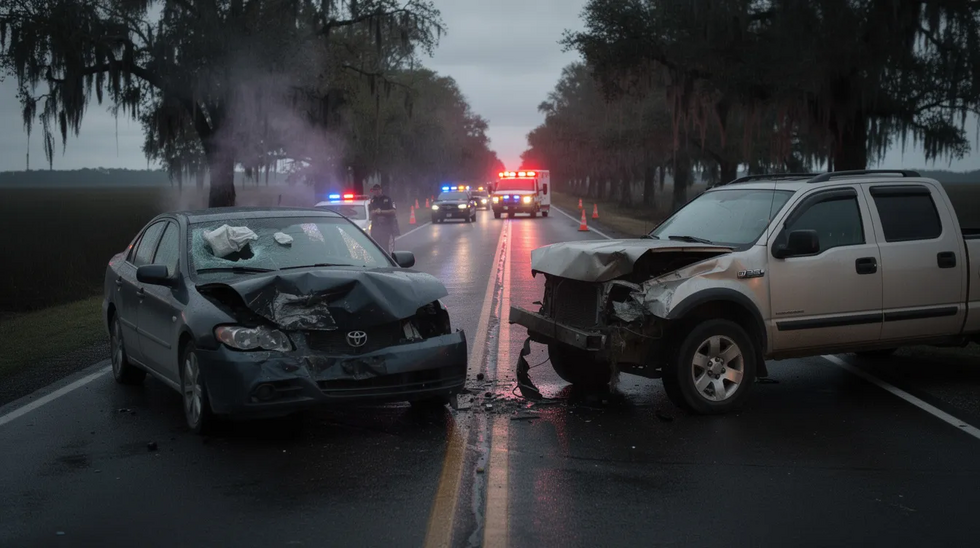
How Louisiana's Comparative Fault Law Changed in 2026
Louisiana's comparative fault law underwent one of its most significant changes in decades. Understanding the difference between the old system and the new one is critical for anyone involved in a car accident in Louisiana today.
The Old Rule: Pure Comparative Fault
Before 2026, Louisiana followed a pure comparative fault system. Under that framework, accident victims could recover damages even if they were 90% or 95% at fault for a crash. Their award was simply reduced by their share of responsibility. There was no cutoff threshold. If the other driver bore even 5% of the blame, you could collect 5% of your damages. Current law still allows recovery if found mostly at fault for accidents that occurred before the cutoff date.
The New Rule: Modified Comparative Fault (51% Bar)
Effective January 1, 2026, Act 15 of 2025 (House Bill 431) amended Louisiana Civil Code Article 2323, moving Louisiana from pure comparative fault to a modified comparative fault system. Under the new rule, if a plaintiff's percentage of fault is equal to or greater than 51%, that person is barred from recovery entirely. If fault is less than 51%, damages are reduced proportionally.
In 2026, Louisiana implemented a 51% bar rule for recovery that significantly impacts fault allocation in claims. Here is how the math works in a $100,000 personal injury claim:
-
25% at fault → You recover $75,000
-
50% at fault → You recover $50,000
-
55% at fault → You recover $0 (under the old law, this would have been $45,000)
This modified comparative fault system applies to car accidents across all of Louisiana, including Orleans Parish, Jefferson Parish, St. Charles Parish, St. John the Baptist Parish, St. Bernard Parish, Plaquemines Parish, and River & Bayou Parishes such as Lafourche and Terrebonne. The statute's language covers "any claim for recovery of damages for injury, death, or loss," so it reaches well beyond car accident cases into personal injury cases of all types.
One important detail: the law is prospective. Accident date, not lawsuit filing date, determines which rule applies. If your crash happened before January 1, 2026, the old pure comparative fault rules still govern your case.
Time matters. Contact Schwartz Law Firm at (504) 837-2263 as soon as possible after a crash so the legal team can start protecting you under Louisiana's new fault system.
What Comparative Fault Means for Your Louisiana Car Accident Case
Comparative fault is the legal rule Louisiana courts, juries, and insurance companies use to divide responsibility when more than one person involved contributes to a crash. Louisiana defines fault as failure to exercise reasonable care, and Louisiana's comparative fault system reduces compensation by the injured party's fault percentage.
Here is how comparative fault works in practice:
-
Each party in a car accident gets a percentage of fault (for example, 0%, 20%, 50%, 60%)
-
That percentage directly reduces that party's recovery if it is 50% or less
-
Once the percentage reaches 51% or more, recovery is completely barred
-
Under the new law, 51% fault results in zero compensation
-
Louisiana's comparative fault system allows partial recovery for damages when fault is 50% or below
Common Shared-Fault Scenarios
Shared fault comes up constantly in Louisiana car accident cases. Consider these examples:
-
Rear end collision with shared blame: The rear driver was following too closely, but the front driver braked suddenly without working brake lights. A jury might assign 60% fault to the rear driver and 40% to the front driver.
-
Drunk driving crash with speeding victim: An impaired driver ran a red light, but the injured person was going 15 mph over the speed limit. If the injured driver is assigned anything under 51% fault, they still recover, but those percentages are fought over intensely.
Comparative fault applies not only to property damage but also to every part of a personal injury claim, including emergency-room bills, physical therapy, lost wages, and pain and suffering. If a passenger contributes to the accident (for instance, by grabbing the steering wheel), their compensation can also be reduced under Louisiana's fault system.
Fault percentages are not fixed at the accident scene. They are often heavily negotiated by the legal team and insurance adjusters over weeks or months as evidence is gathered, reviewed, and challenged.
How Fault Is Determined After a Louisiana Car Accident
Determining fault after a crash is a detailed investigation, not a snap judgment. Evidence is crucial for establishing fault in Louisiana accidents, and fault percentages are assigned based on evidence collected at the scene and during the investigation that follows.
Key Evidence Sources
-
Police reports and the official accident report: Officers create crash diagrams, note citations, and record initial statements from each person involved. The official police report is influential, but it is not the final word on determining liability.
-
Witness statements and witness testimony: Independent bystanders, passengers, and other drivers can provide accounts of driver behavior that either support or contradict the police narrative.
-
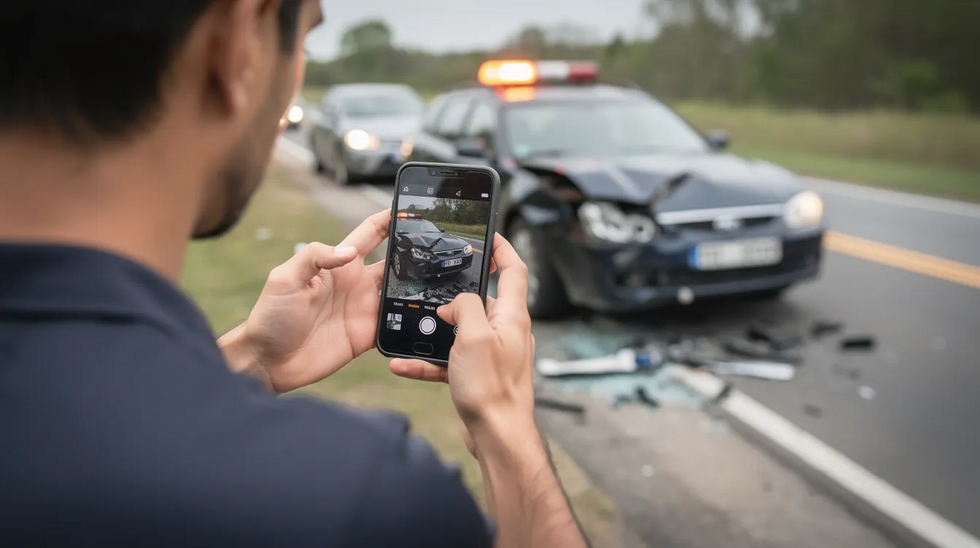
Photos and videos: Cell phone photos, dashcam footage, and traffic camera footage captured near the accident scene can reveal details invisible in a written report. This physical evidence often proves decisive.
-
Cell phone records: These can establish whether distracted driving played a role, showing whether a driver was texting or on a call at the moment the crash happened.
-
Surveillance footage: Nearby business cameras frequently capture collisions on busy streets and intersections.
-
Vehicle damage patterns and skid marks: Physical evidence on the vehicles and road surface helps experts reconstruct speed, angle of impact, and braking behavior.
Accident Reconstruction and Expert Analysis
When fault is contested, professional accident reconstruction can recreate the sequence of events using physics, engineering, and digital modeling. Courts in Louisiana frequently apply the Watson factors to guide fault allocation, weighing the nature of each party's conduct, the risks created, knowledge of danger, and other circumstances.
The legal team also looks for specific violations: reckless driving, drunk driving (breath or blood test results, bar receipts), running traffic signals or stop signs, and speeding. These factors carry significant weight in determining fault, especially on high-traffic corridors like Airline Highway or I-10 through the Greater New Orleans metro.
If you have photos, videos, or witness contact information, share them with Schwartz Law Firm as early as possible. The firm can use them to argue for a lower fault percentage on your side and to counter whatever the other driver's insurance company presents.
What If the Police Report Says You Were at Fault?
Being listed as "at-fault" in the official police report or receiving a traffic citation does not automatically end your injury claim under Louisiana's comparative fault law. Police reports influence but do not solely determine fault. Officers make quick assessments at the scene, sometimes without full information, and those assessments can be challenged.
Chris Schwartz and his legal team routinely request the full crash report, supplemental narratives, and bodycam footage to spot mistakes or incomplete information that unfairly points blame at the injured driver. Additional evidence, such as new witness statements, nearby business surveillance footage, or a professional accident reconstruction, can shift blame away from the client or establish shared fault between drivers.
A Practical Example
Imagine a rear end collision in Metairie where the officer initially cited the injured driver for "improper lane change." The injured driver's insurance claim looked dead on arrival. But surveillance video from a nearby gas station later showed the other driver speeding and texting on a cell phone in the moments before impact. With that evidence, the client's fault was reduced well below the 51% bar, and compensation was recovered for serious injuries that included surgery and months of physical therapy.
Do not assume the police report is the last word. Call Schwartz Law Firm at (504) 837-2263 or send a message through the online contact form before speaking in depth with any insurance company about your accident.
How Insurance Companies Use Louisiana's 51% Comparative Fault Rule Against You
After the 2026 change, the other driver's insurance company has an even stronger financial motive to argue that you bear most of the blame. Crossing the 51% threshold means the insurer pays nothing on the claim, so even a 1% shift in fault allocation, from 50% to 51%, can turn a six-figure recovery into zero.
Common Insurer Tactics
-
Stretching small mistakes into major negligence: Following a bit too closely, glancing at a phone, or braking a half-second late gets reframed as reckless driving.
-
Over-relying on one sentence in a police report: Insurance adjusters cherry-pick language from the official accident report to shift blame, ignoring contradictory evidence.
-
Misquoting or selectively editing witness statements: Adjusters sometimes paraphrase witnesses in ways that change meaning.
-
Recorded statements designed to trap you: The driver's insurance company may call within days of a crash, asking seemingly harmless questions intended to get injured drivers to "admit" partial fault.
-
Challenging your medical treatment: Adjusters downplay serious injuries, argue that visible injuries are pre-existing, and attempt fast, low settlements before the full impact of your injuries is known.
-
Hiring defense experts: Insurance defense teams enlist their own engineers, doctors, and reconstructionists to support higher fault percentages against the claimant and shift blame toward you.
Insurance companies may minimize payouts by increasing a driver's assigned percentage of fault. Legal representation is crucial for navigating insurance claims effectively and making sure your side of the story is heard.
Schwartz Law Firm handles communications with insurers for clients, uses its own network of experts when necessary, and frames the evidence to keep clients safely below the 51% fault bar whenever the facts allow. You should never handle insurance adjusters on your own in a contested fault situation.
Damages You Can Recover If You Are 50% or Less at Fault
If your share of fault stays at 50% or below, you can seek compensation for a wide range of losses. Accident victims can recover damages even if partially at fault. Here is what is on the table:
Economic Damages
-
Past and future medical bills (ER visits, surgery, physical therapy, prescriptions)
-
Future medical expenses for ongoing care or rehabilitation
-
Medical expenses related to diagnostic imaging, specialist visits, and equipment
-
Lost wages from time missed at work during recovery
-
Reduced earning capacity if injuries limit your ability to work long-term
-
Property damage to your vehicle and personal belongings
-
Out-of-pocket costs such as rental cars, co-pays, and transportation to appointments
Non-Economic Damages
-
Physical pain and suffering
-
Emotional distress and mental anguish
-
PTSD or anxiety after a violent crash
-
Loss of enjoyment of life
-
Loss of consortium for a spouse in severe cases
In drunk driving accidents, Louisiana law may allow punitive or exemplary damages intended to punish especially dangerous conduct by a speeding driver or intoxicated one driver.
Wrongful Death Claims
When a loved one is killed in a Louisiana car accident, surviving family members may seek funeral expenses, loss of financial support, and loss of companionship through a wrongful death claim. These claims are also subject to comparative fault reduction.
Settlement negotiations often begin after maximum medical improvement, when the full scope of medical treatment and its costs are clear. Whatever the total value of damages is, the recovery is reduced by the client's percentage of fault. For example, 30% fault in a drunk driving rear end collision in New Orleans means receiving 70% of the calculated damages.
Steps to Take After a Car Accident in Louisiana to Protect Your Fault Position
The actions you take in the first hours and days after a crash can significantly affect how fault is assigned and how strong your injury claim will be. Here is a step-by-step guide:
At the Scene
-
Stay at the accident scene. Leaving can result in criminal charges and destroys your credibility.
-
Call 911 for police assistance. An official police report documenting the crash is essential.
-
Request medical help for anyone with visible injuries or complaints of pain.
-
Cooperate with officers but do not admit fault or guess about what happened. Stick to the facts.
Gather Evidence Immediately
-
Take clear photos and short videos of all vehicles, road conditions, traffic signals, license plates, and any visible injuries
-
Document the accident scene with photographs and diagrams of vehicle positions
-
Collect contact and insurance information from all drivers involved
-
Get names and phone numbers for any witnesses before they leave
-
Look for nearby traffic camera footage or surveillance footage from businesses
After Leaving the Scene
-
Seek medical attention within 24–48 hours, even if injuries seem minor. Delay gives insurers ammunition to argue your injuries "came later" or are unrelated.
-
Notify your insurance company within 24 hours of the accident, but keep your description brief and factual.
-
Do not give a detailed recorded statement or sign medical releases for the other driver's insurance company before speaking with an attorney who understands Louisiana's comparative fault system.
-
Preserve all medical records, receipts, and correspondence related to the crash.

Injured in the Greater New Orleans Area or River & Bayou Parishes? Call Schwartz Law Firm at (504) 837-2263 right after seeking medical care, or contact the office through the online form to schedule a free consultation. The sooner Chris Schwartz and his team get involved, the stronger your fault position will be.
Why Work With Schwartz Law Firm on a Comparative Fault Car Accident Case?
Schwartz Law Firm is a boutique Louisiana litigation firm led by Christopher "Chris" Schwartz, with more than 25 years of experience handling car accidents and personal injury claims statewide. When how much compensation you recover depends on a fault percentage that can swing by a single point, you need an attorney who understands both sides of the table.
Chris Schwartz's Background
Chris spent nearly a decade as a workers' compensation claims adjuster for Travelers Insurance before earning his J.D. and M.B.A. from Loyola University New Orleans, completing professional instruction at Harvard Law School, and founding his own firm. He is also the author of Road to Justice. That insurance-industry experience gives him direct insight into how insurance companies evaluate fault and injury claims, and how to counter their strategies.
Geographic Focus
With offices in Metairie and Baton Rouge, the firm represents injured drivers and passengers throughout the Greater New Orleans Area (Orleans, Jefferson, St. Charles, St. John the Baptist, St. Bernard, Plaquemines parishes) and River & Bayou Parishes including St. James, Ascension, Lafourche, and Terrebonne, as well as clients statewide.
Practice Scope
The firm's auto accident practice covers rear end collisions, intersection crashes, hit-and-run accidents, drunk driving cases, 18-wheeler wrecks, uninsured and underinsured motorist claims, and work-related auto accidents.
How the Firm Works
-
Contingency fee basis: Clients do not owe attorney's fees unless the firm recovers money for them.
-
Case costs advanced: The firm covers necessary costs like expert witnesses and accident reconstruction in appropriate cases, so there are no out-of-pocket expenses for injured victims.
-
Community commitment: Upon settlement, a portion of the attorney's fee can be donated to a nonprofit organization chosen by the client, reflecting the firm's dedication to giving back in southeast Louisiana.

Ready to discuss your specific accident, fault concerns, and personal injury claim? Call Chris Schwartz directly at (504) 837-2263 or send a secure message online. The consultation is free, and the conversation is confidential.
FAQ: Comparative Fault and Louisiana Car Accidents
Does the 51% comparative fault rule apply to all Louisiana car accidents now?
The modified comparative fault rule with the 51% bar applies to Louisiana car accident cases where the accident occurred on or after January 1, 2026. The accident date, not the claim filing date, controls which rule applies. If your crash happened before that date, the previous pure comparative fault system still governs your case. Louisiana accident victims uncertain about timing should contact Schwartz Law Firm for a free review of their accident date and legal options.
Can I still make an injury claim if I wasn't wearing a seat belt?
Failure to wear a seat belt can be raised by the insurance company to argue comparative fault and potentially reduce your compensation, especially for certain types of injuries. However, not using a seat belt does not automatically bar a Louisiana personal injury claim. The other driver's negligence, whether it involved speeding, drunk driving, or running a red light, still matters in overall fault determination. A local car accident attorney can work with medical and reconstruction experts to clarify how much of the harm was truly caused by the collision itself versus the seat belt issue.
What if both drivers admit they "could have done something differently"?
Mutual regret or casual statements at the accident scene do not decide legal fault percentages. Louisiana courts and insurers must still consider physical evidence, traffic laws, and overall circumstances. Attorney-guided statements and formal evidence like photos, witness accounts, and crash diagrams usually carry far more weight than offhand remarks made under stress moments after a crash happened. Louisiana's fault laws require a careful, evidence-based process. Injured people should avoid speculating about blame and let an experienced legal team analyze the facts under Louisiana's comparative fault law.
How long do I have to file a Louisiana car accident lawsuit now?
Louisiana personal injury lawsuits must generally be filed within two years from the date the accident occurred. Some older cases may be subject to different deadlines depending on when the accident happened and which version of the law applies. Missing the applicable deadline usually means losing the right to seek compensation permanently, even if the other driver was clearly at fault. Contact Schwartz Law Firm promptly after a crash so the team can confirm the correct deadline and take timely legal action.
What if the other driver is uninsured or underinsured?
Comparative fault rules still matter in uninsured and underinsured motorist (UM/UIM) insurance claims because your own insurer will also evaluate fault percentages when deciding how much to pay. Many Louisiana drivers carry UM coverage that can help cover medical bills, lost wages, and other losses when the at-fault driver has no insurance or not enough coverage. If you were hit by an uninsured driver in the Greater New Orleans or River & Bayou parishes, speak with Schwartz Law Firm about how comparative fault interacts with your UM policy and overall recovery strategy.


Comments
There are no comments for this post. Be the first and Add your Comment below.
Leave a Comment